NBA Referee Betting Scandal: Complete History and UK Bettor Guide
 Available in US
Table of Contents
- The Scandal Timeline in 90 Seconds
- Seven Decades of Officials Gone Wrong
- The Mechanics of a Fixed Basketball Game
- The Soft Target: Player Props and Individual Markets
- Following the Money to Organised Crime
- How the Sportsbooks Catch Cheaters
- The League’s Response: Reform After Each Crisis
- What These Scandals Mean for British Punters
- Read the market before you trust it
- Common Questions About NBA Betting Scandals
- The Integrity Question That Never Goes Away
NBA Betting Intelligence & Scandal Analysis
By Marcus Webb
I was working the overnight shift at a Vegas sportsbook in July 2007 when the phone calls started coming in. Panicked floor managers. Compliance officers demanding historical records. Within hours, news broke that an NBA referee had been betting on games he officiated. That referee was Tim Donaghy, and the scandal would reshape everything I thought I knew about professional basketball integrity.
Nearly two decades later, I watched the October 2025 arrests unfold with a sickening sense of déjà vu. Thirty-four people swept up by the FBI, including current and former NBA players. Terry Rozier allegedly pocketing $100,000 for sharing injury information. La Cosa Nostra families running gambling operations through the league. The more things change, the more they stay depressingly familiar.
For UK bettors wagering on NBA markets, these scandals raise uncomfortable questions. Can you trust the integrity of the games you are betting on? How do crooked officials actually manipulate outcomes? What protections exist when you place a stake through a Gambling Commission-licensed bookmaker?
I have spent nearly twenty years investigating these issues — first as an oddsmaker watching suspicious line movements in real time, then as a journalist piecing together the evidence trails. This guide covers the complete history of NBA referee betting scandals from Sol Levy in 1950 to the current crisis, explains how manipulation actually works at a mechanical level, and provides practical guidance for British punters navigating a market where integrity concerns are more relevant than ever.
Tim Donaghy bet on NBA games he officiated for four consecutive seasons from 2003 through 2007. The 2025 scandal involves at least seven NBA games under federal scrutiny for manipulation. Between these bookends lies a pattern that every serious bettor needs to understand.
The Scandal Timeline in 90 Seconds
- NBA referee corruption spans 75 years — from Sol Levy’s 1950 ban through Tim Donaghy’s four-season betting scheme to the 34 arrests in October 2025 involving La Cosa Nostra ties.
- Crooked referees manipulate point spreads rather than winners, succeeding approximately 75% of the time through foul calls and game management decisions.
- Prop bets represent the highest manipulation risk — the 2025 scandal centred on players sharing injury information worth $100,000 in payments and over $200,000 in coordinated bets.
- UK bettors benefit from Gambling Commission protections unavailable in American markets, including mandatory integrity monitoring and £100 million annual harm prevention funding.
- Detection has improved dramatically — the Rozier scheme was caught in real time through regulated betting flows, unlike Donaghy who operated undetected for four consecutive seasons.
Seven Decades of Officials Gone Wrong
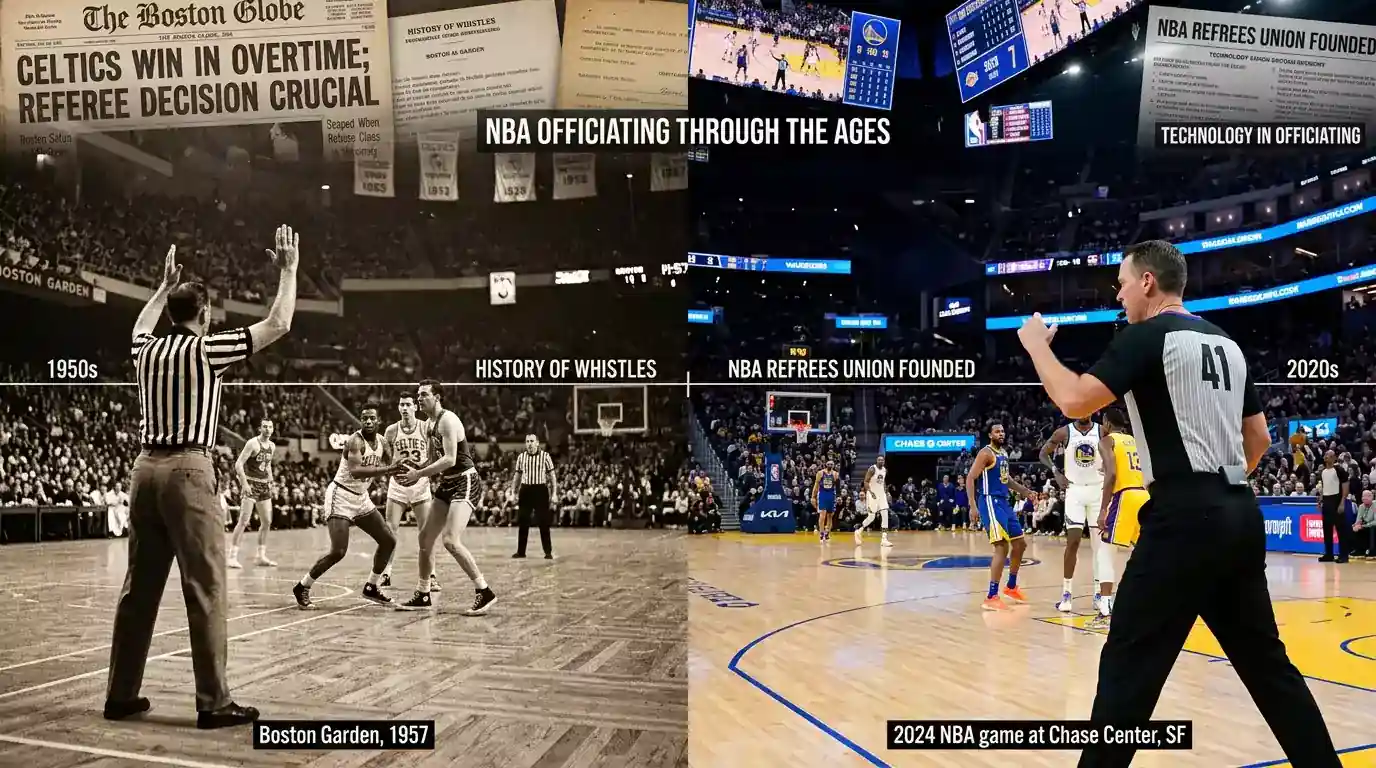
The first time I laid out the full timeline of NBA officiating scandals on my office wall, the pattern hit me immediately. These are not isolated incidents. They cluster around moments when betting markets expand, when oversight relaxes, when the money gets too tempting. Understanding this history is not academic — it tells you where the vulnerabilities have always been.
Professional basketball’s integrity problems predate the modern betting explosion by decades. In 1950, before the NBA had even established itself as the dominant American basketball league, a referee named Sol Levy was fixing games for gamblers. Seven criminal counts. Six fixed games in a single season. He became the first official banned from the league, and somehow the NBA learned almost nothing from the experience.
The timeline below captures the major scandals, but what matters is the gap between them. Fifty-six years passed between Sol Levy’s ban and Tim Donaghy’s arrest. During that half-century, the league convinced itself the problem had been solved. It had not been solved. It had gone undetected.
| Period | Key Figures | Core Manipulation | Outcome |
|---|---|---|---|
| 1950-1951 | Sol Levy (referee) | Point shaving, game fixing | First official banned from NBA |
| 2003-2007 | Tim Donaghy (referee), Jimmy Battista, Tommy Martino | Betting on officiated games, point spread manipulation | 15 months federal prison, Pedowitz Report reforms |
| 2024 | Jontay Porter (player) | Prop bet manipulation, under performance | Lifetime ban from NBA |
| 2023-2025 | Terry Rozier, Chauncey Billups, Damon Jones (players/coaches) | Insider information sharing, prop bet conspiracy | 34 arrests, federal indictments pending |
What this table cannot capture is the evolution of betting itself. When Donaghy was sentenced to 15 months in federal prison on July 29, 2008, sports betting remained illegal in most American states. The daily handle was a fraction of current volumes. US sports betting revenue reached $16.96 billion in 2025 alone — a 22.8% increase from the previous year. The total handle exceeded $166 billion.
That explosion of legal betting changed the economics of corruption. The sums involved in the 2025 arrests dwarf anything from the Donaghy era. FBI Director Kash Patel put it bluntly at the October press conference: the fraud amounts to “tens of millions of dollars” — not thousands, not even millions in the lower registers.
Each scandal also reveals how detection has improved. Donaghy operated for four years before anyone caught on. The unusual betting on Terry Rozier’s “unders” in March 2023 was detected in real time because the bets were placed legally through regulated markets. That matters for UK bettors — your stakes flow through a system with far more oversight than existed two decades ago.
The Forgotten Man Who Started It All
I spent three months in newspaper archives tracking down the original Sol Levy reporting. Most of it had been forgotten — buried in microfilm reels that nobody had requested in decades. What I found was a scandal the NBA has worked hard to erase from institutional memory.
Sol Levy refereed in the NBA from 1948 to 1951, during an era when professional basketball was still finding its footing against college competition. The pay was modest. The temptations were significant. Levy succumbed to both.
During the 1950-51 season, Levy fixed six NBA games for gambling interests. He was charged with seven criminal counts — a remarkable number that suggests prosecutors had solid evidence for multiple instances of manipulation. The details of how he operated have been largely lost to history, but the pattern matches what we would see again with Donaghy decades later: a referee using his discretionary authority over fouls, violations, and game flow to influence point spreads rather than outright winners.
Levy became the first official banned from the league. His case should have prompted systematic reforms. Instead, the NBA treated it as an isolated incident — a single bad actor rather than evidence of structural vulnerability. That institutional denial would persist for over half a century.
The Sol Levy case matters because it establishes a template. Referees have enormous influence over basketball outcomes through legitimate decisions. The line between a hard foul and a common foul, between a charge and a blocking foul, between a travel and a gather — these judgment calls add up. A referee who wants to shade outcomes toward a particular point spread has ample opportunity to do so without making obviously corrupt calls.
When I discuss Sol Levy’s full story with younger colleagues, they are always surprised that this history exists. The NBA’s selective memory serves a purpose, but it leaves bettors unaware of how deep these problems run.
The Referee Who Changed Everything
The morning after Donaghy’s arrest became public, I walked into work to find our compliance team had already pulled every game he had officiated in the previous season. What they found made my stomach turn. The line movements on Donaghy games followed patterns we had dismissed as sharp money at the time. In hindsight, the signature was obvious.
Tim Donaghy officiated 772 regular season games and 26 playoff games during his 13-season NBA career. For the final four of those seasons — 2003-04 through 2006-07 — he was betting on games he worked. The scale of that betrayal still staggers me. This was not a single desperate act. It was a sustained operation running through nearly 300 games.
The Donaghy Payment Structure
Donaghy received $2,000 cash for each correct betting pick initially. By the 2006-07 season, this had increased to $5,000 per correct pick. Co-conspirator Tommy Martino claimed Donaghy was paid $120,000 between December 2006 and April 2007 alone. Gambler Jimmy Battista put the total payments at $201,000 to $209,000. The discrepancy in these figures reflects the cash-based nature of the operation and the competing testimonies in court.
Commissioner David Stern called it “the most serious situation and worst situation that I have ever experienced… potentially one of the most damaging scandals in the history of American sports.” He was not exaggerating. The scandal threatened the fundamental premise that professional basketball outcomes are determined by player ability rather than official corruption.
ESPN analysis found something that haunted me for years: ten straight games in 2007 where Donaghy worked saw the point spread move 1.5 points or more before tip-off. The big money won every single time. That is not variance. That is information flow.
The full details of the Donaghy operation reveal a sophisticated scheme involving high school friends turned gambling intermediaries, connections to professional gamblers, and a referee willing to sell his integrity for relatively modest sums. What I find most disturbing is not that Donaghy did it — human greed is predictable. It is that he did it for four years without detection.
October 2025 and the New Generation of Corruption
I was finishing my morning coffee on October 23, 2025 when the news alerts started flooding my phone. Thirty-four arrests. NBA players among them. La Cosa Nostra involvement. The scale exceeded anything since Donaghy, and in some ways it was worse. This was not one rogue referee — this was an organised network exploiting modern betting markets.
On that single day, federal agents arrested current and former NBA figures including Terry Rozier, Chauncey Billups, and Damon Jones. The charges centred not on referees fixing games, but on players and insiders sharing confidential information with gambling syndicates. The mechanism had evolved even if the underlying corruption remained constant.
The Rozier Allegations
Federal prosecutors allege that Terry Rozier received $100,000 for providing insider information about his injury status before a March 2023 game against New Orleans. He played only 9 minutes and 36 seconds before leaving with a reported foot injury. Gamblers allegedly placed over $200,000 in bets predicting Rozier’s underperformance before sportsbooks moved lines. The information advantage was worth far more than the player’s payment.
FBI Director Kash Patel framed the arrests in stark terms: “Let’s not mince words. This is the insider trading saga for the NBA.” Christopher Raia, Assistant Director in Charge of the FBI New York Field Office, added that “this alleged illegal gambling operation defrauded innocent victims out of tens of millions of dollars and established a financial funnel for La Cosa Nostra.”
Federal prosecutors identified at least seven NBA games between February 2023 and March 2024 under scrutiny for manipulation. That represents confirmed suspicious activity — the actual scope may be broader. The investigation remains ongoing as I write this.
Commissioner Adam Silver’s response echoed Stern’s language from 2007: “There’s nothing more important to the league and its fans than the integrity of the competition. I had a pit in my stomach. It was very upsetting.” The full breakdown of the 2025 scandal reveals connections between gambling syndicates and organised crime families that extend far beyond basketball itself.
For UK bettors, the 2025 arrests demonstrate that betting manipulation has not disappeared. It has adapted to new market structures, new information flows, and new vulnerabilities — particularly in prop betting markets. Understanding the mechanics behind these schemes reveals why detection remains so difficult.
The Mechanics of a Fixed Basketball Game
A floor manager once told me that understanding manipulation requires forgetting everything you think you know about game fixing. Hollywood shows us refs making blatantly wrong calls to hand victories to one team. Reality operates through subtler channels that casual observers cannot distinguish from normal officiating.
The critical insight is that corrupt referees almost never try to determine who wins. That would be too obvious and too risky. Instead, they manipulate the margin of victory — the point spread that determines betting outcomes. A team can win by 15 points or by 3 points and the same squad has won, but those two outcomes produce opposite results for spread bettors.
Handicapper Brandon Lang, speaking to ESPN during the Donaghy investigation, explained the mathematics plainly: a crooked NBA referee can directly influence the outcome of a game 75 percent of the time if he has money on the game. That number should alarm anyone betting on basketball. Three out of four times, a motivated official can deliver the spread.
How does a referee accumulate that much influence without making obviously corrupt calls? The answer lies in the cumulative impact of discretionary decisions. Basketball generates dozens of judgment calls per quarter — fouls, travels, charges, blocks, out-of-bounds decisions. None of these calls individually seems suspicious. Collectively, they shift momentum and scoring in predictable directions.
Consider foul calls alone. When a team enters the bonus situation — typically after the fifth team foul in a quarter — every subsequent foul results in free throws. A referee who calls marginal fouls against one team pushes them into the bonus faster, giving their opponents additional scoring opportunities through free throws. Those extra points do not change who wins, but they can easily cover or blow a spread.
The timing of calls matters as much as their accuracy. A referee can allow more physical play when one team is building a lead, then tighten the whistle when the other team needs to rally. This gives the appearance of balanced officiating across the full game while systematically advantaging one side at critical moments.
I have watched hundreds of games flagged for suspicious line movements. What always strikes me is how normal they look in real time. The corrupt calls hide among legitimate ones. Only statistical analysis across many games reveals patterns — and even then, proving intent rather than incompetence remains nearly impossible.
Understanding how referees fix NBA games at a technical level is essential for any serious bettor. The manipulation does not look like cheating. It looks like officiating.
Why the Spread Matters More Than the Winner
When I explain spread betting to newcomers, I use a simple analogy. Imagine two teams: the clearly better side and the underdog. Everyone knows who will probably win, so betting on the winner alone offers no value. The spread equalises the action by asking a different question: will the favourite win by more than a specific margin?
A typical NBA spread might set a favourite at -6.5 points. If that team wins by 7 or more, spread bettors who backed them win. If the favourite wins by 6 or fewer — or loses outright — underdog spread bettors collect. This structure explains why corrupt officials target margins rather than outcomes.
| Spread | Favourite Must | Underdog Covers If |
|---|---|---|
| -6.5 | Win by 7+ | Lose by 6 or fewer, or win |
| -3.0 | Win by 4+ | Lose by 2 or fewer, or win |
| -10.5 | Win by 11+ | Lose by 10 or fewer, or win |
ESPN’s analysis of Donaghy games found that line movements of 1.5 points or more occurred in ten consecutive games he worked during 2007. In every instance, the side receiving the sharp money covered. That pattern reveals how inside information about referee assignments translated into betting profits — gamblers knew which way specific referees would shade close calls.
The complete guide to NBA point spread betting covers how lines are set and why they move. For our purposes here, the essential point is that manipulation targets the margin, not the outcome.
Fouls as the Primary Manipulation Tool
During my years setting lines, I developed an obsession with foul differentials. Not because fouls themselves determine winners — they rarely do — but because they are the easiest officiating metric to manipulate without detection.
The bonus situation is the key mechanism. Once a team accumulates five fouls in a quarter, every subsequent foul sends the opposing team to the free throw line. A referee who wants to inflate one team’s score simply calls more fouls against their opponents. The mathematics accumulate quickly.
The beauty of this approach, from a corrupt official’s perspective, is deniability. Basketball is a contact sport. Every possession involves marginal contact that could reasonably be called either way. A referee who consistently calls marginal contact against one team is not making obviously wrong calls — they are making judgment calls that happen to trend in a particular direction.
Technical fouls offer another avenue. A referee can assess a technical for excessive arguing, taunting, or delay of game at their discretion. Each technical means one free throw plus possession. Used strategically at key moments, technicals can swing point differentials without appearing manufactured.
What makes foul manipulation so effective is its compounding nature. Early fouls put key players in foul trouble, changing how teams defend. Teams protecting players with four fouls become less aggressive, affecting scoring throughout the remainder of the game. The impact extends beyond the free throws themselves.
The Donaghy investigation revealed how he exploited these dynamics systematically. He did not need to make bad calls — he needed to make more calls against one side in situations where contact was genuinely borderline. Across a 48-minute game, that accumulated discretion translated into reliable point spread manipulation.
For bettors, this reality creates a difficult challenge. You cannot watch a game and identify corrupt officiating in real time. You can only spot patterns across many games — which is exactly what integrity monitors now do.
The Soft Target: Player Props and Individual Markets
The 2025 scandal taught the betting industry a lesson it should have learned from Jontay Porter a year earlier. Prop bets — wagers on individual player statistics rather than game outcomes — represent the most vulnerable markets in modern sports betting. They are also among the most popular.
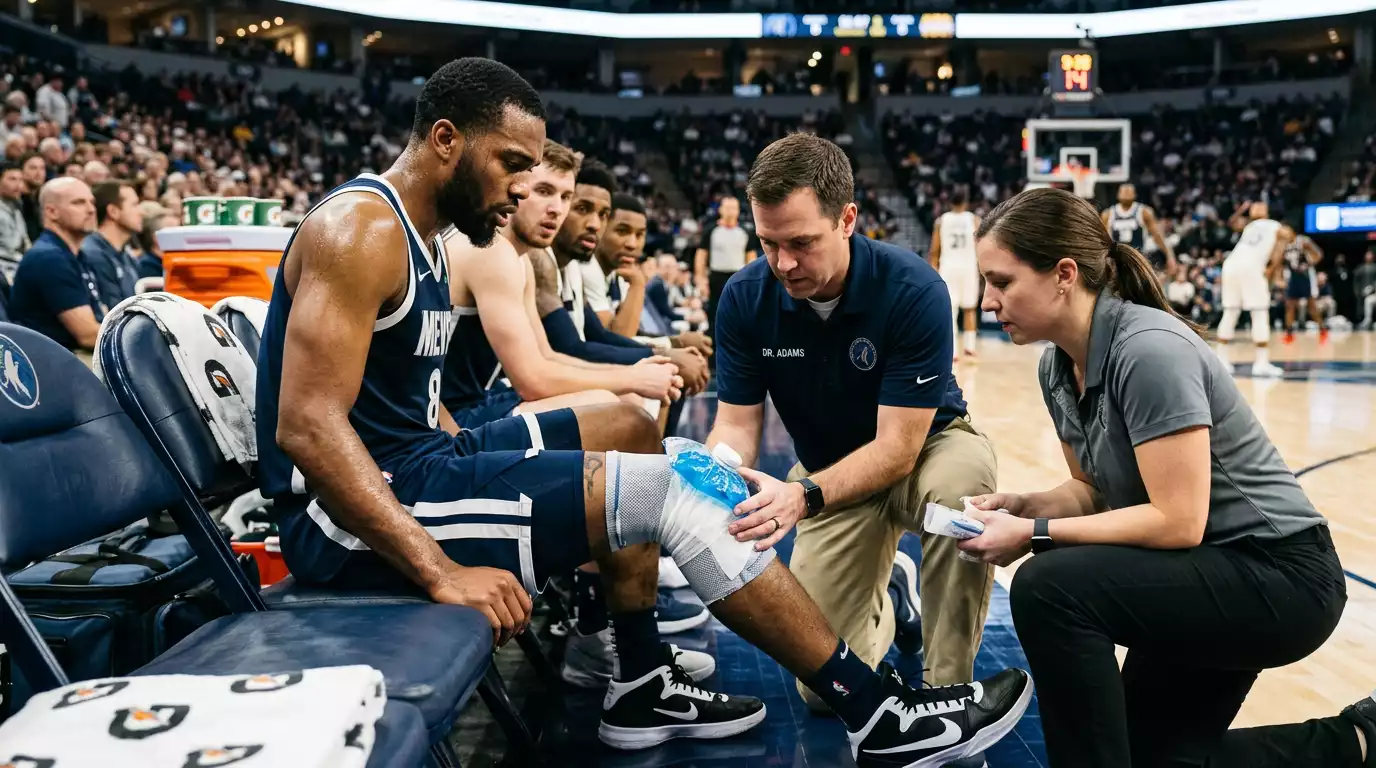
When Terry Rozier allegedly sold his injury information for $100,000, he was not helping gamblers predict who would win his team’s game. He was giving them an edge on whether he would exceed or fall short of his projected statistics. That distinction matters enormously. Prop manipulation requires no referee involvement, no point shaving, no complex scheme to affect team outcomes. It requires only one player willing to underperform or share privileged information.
The Information Asymmetry Problem
Gamblers allegedly placed over $200,000 in bets predicting Rozier’s underperformance before sportsbooks moved lines on his March 2023 game. The bets were detected in real time because they flowed through regulated markets. But the damage was done — those with insider information about his injury status had already locked in their positions. The $100,000 payment to Rozier represented a small fraction of potential profits.
Commissioner Adam Silver articulated the structural problem clearly: “It’s too easy to manipulate something which seems otherwise small and inconsequential to the overall score. There’s nothing more important than the integrity of the competition.” He is right, but the business reality works against solutions. Prop bets generate enormous handle for sportsbooks. Taking them off the board entirely would cost operators billions.
The Jontay Porter case in 2024 previewed everything we saw in 2025. Porter manipulated his own prop lines by deliberately underperforming, exiting games early after minimal production. Sportsbooks detected the pattern, and Porter received a lifetime ban. The response from major operators was telling: they agreed to stop offering player prop bets on athletes with two-way contracts or 10-day deals. Those restrictions acknowledge that less prominent players face greater temptation and less scrutiny.
For UK bettors, the full analysis of prop bet manipulation should inform how you approach these markets. The Gambling Commission requires licensed operators to maintain integrity systems, but detection works better for high-liquidity markets. A £20 wager on a marginal player’s rebounds faces less scrutiny than large positions on star performers.
I no longer bet NBA props involving players outside the top tier of their teams. The risk-reward calculus shifted decisively after 2025. When the people closest to the action have financial incentives to manipulate outcomes, caution beats confidence.
Following the Money to Organised Crime
I spent two decades dismissing mob involvement in sports betting as Hollywood mythology. The 2025 indictments forced me to revise that assessment completely. The FBI did not simply arrest individuals exploiting NBA information — they exposed an organised crime infrastructure running through professional basketball betting.
Christopher Raia’s statement at the October 2025 press conference laid out the connection explicitly: “This alleged illegal gambling operation defrauded innocent victims out of tens of millions of dollars and established a financial funnel for La Cosa Nostra.” That phrase — “financial funnel for La Cosa Nostra” — signals prosecutorial evidence linking the scheme to traditional organised crime families.
The indictments reference multiple crime families: Bonanno, Gambino, Lucchese, and Genovese. These are not marginal criminal enterprises. They are established organisations with multi-generational experience in illegal gambling operations. Their involvement transforms what might have seemed like individual corruption into something more systematic.
The financial scale explains why organised crime would invest in NBA manipulation. Tens of millions in fraud justify significant upfront payments to players and insiders. The $100,000 allegedly paid to Terry Rozier represents a tiny fraction of what syndicate operators stood to gain.
For UK bettors wagering through licensed bookmakers, the organised crime dimension raises systemic questions about market integrity. The detailed investigation into La Cosa Nostra’s NBA gambling operations reveals the scope of these networks and why they remain difficult to dismantle.
How the Sportsbooks Catch Cheaters
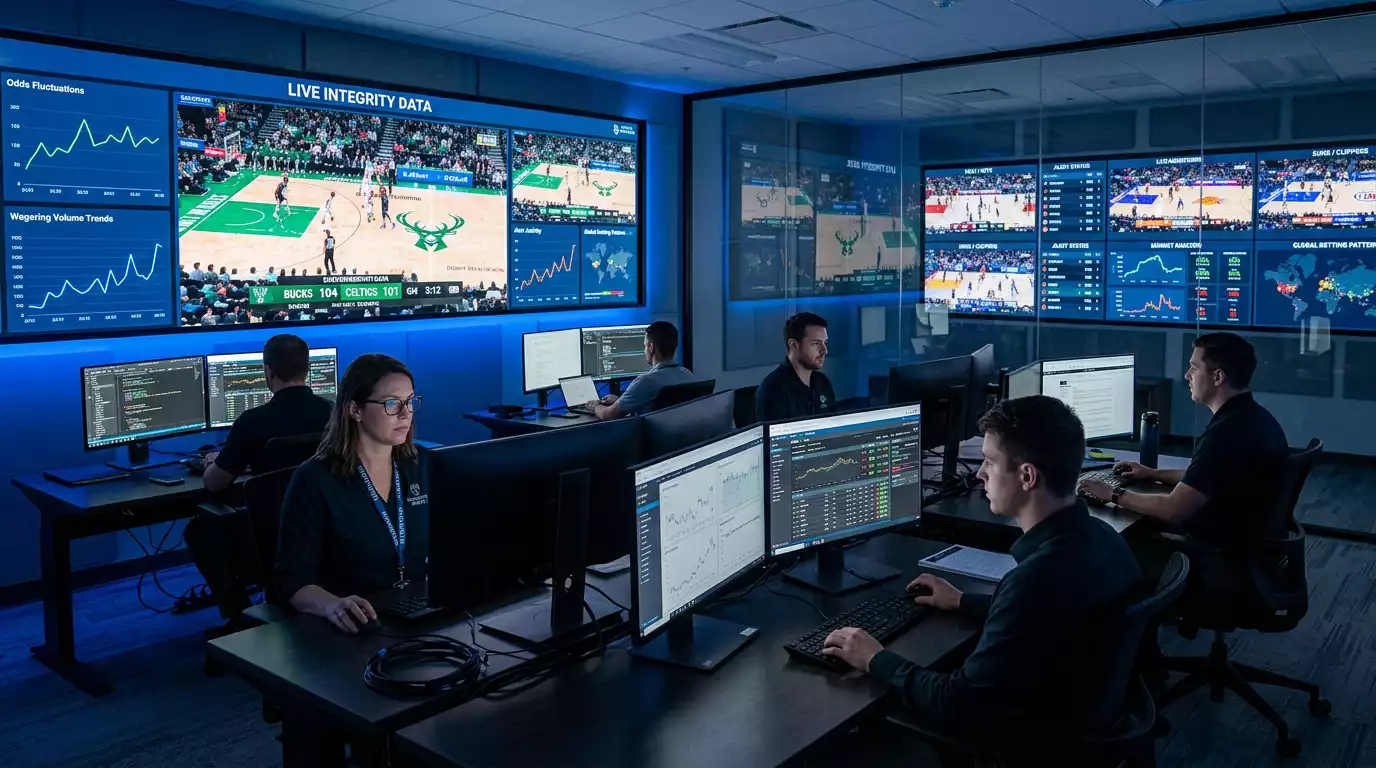
The one positive development from decades of scandal is detection capability. When Donaghy was fixing games in 2005, integrity monitoring was primitive — mostly human analysts noticing unusual line movements after the fact. The industry learned, albeit slowly. Modern systems flag suspicious betting patterns as they occur rather than reconstructing evidence months later.
The International Betting Integrity Association represents the centre of modern detection efforts. IBIA members account for over $300 billion of global betting turnover annually. That enormous data flow enables pattern recognition impossible for individual operators. In 2024, IBIA operators reported 59 basketball matches as being subject to suspicious betting activity — not exclusively NBA, but including the league in global basketball monitoring.
| Detection Layer | What It Catches | Limitation |
|---|---|---|
| Real-time line monitoring | Sharp movements before information becomes public | Cannot distinguish insider trading from skilled analysis |
| Bet pattern analysis | Coordinated positions across multiple accounts | Sophisticated syndicates use multiple identities |
| Cross-market correlation | Linked movements across different operators | Requires data sharing between competitors |
| Performance anomaly flagging | Statistical deviation from expected outcomes | Cannot prove intent, only flag for investigation |
Adam Bjorn, COO of Plannatech — a data provider to integrity monitor IC360 — explained the current state of detection: “The deterrent isn’t that it can’t be done. The deterrent is now more eyes on it. There’s people looking.” That honest assessment captures both progress and limitation. Manipulation remains possible. Detection has improved. Perfect prevention remains elusive.
The NBA’s internal monitoring has also evolved significantly since the Pedowitz Report of 2008. The league now announces officiating assignments on the morning of games rather than 90 minutes before tip-off. That timing change directly reduces the value of referee assignment information to gamblers — there is simply less time to place bets based on knowing which officials will work a particular game.
Jason Van’t Hof, former Vice President of Investigations at IC360, told ESPN in December 2025 that “we’re in a bit of a watershed moment this year.” The combination of high-profile arrests, enhanced monitoring, and regulatory pressure has created momentum for systemic reform.
For UK bettors, the detection apparatus provides meaningful protection. Stakes placed through Gambling Commission-licensed operators flow through systems designed to flag suspicious activity. The NBA’s official memo acknowledged that unusual betting on Rozier was detected because the bets were placed legally. Regulated markets protect bettors in ways that offshore or illegal operations cannot.
The League’s Response: Reform After Each Crisis
The NBA’s approach to integrity reform follows a predictable pattern. Scandal erupts. Public outrage builds. The league commissions an investigation. Reforms are announced. Years pass. Another scandal emerges. I have watched this cycle three times now, and the pattern itself tells a story about institutional limits.
The Pedowitz Report of 2008 represents the most significant reform effort to date. After Donaghy’s arrest, the league commissioned former federal prosecutor Lawrence Pedowitz to conduct an independent investigation. His 116-page report found something that shocked many observers: 52 of 57 NBA referees had engaged in some form of gambling, though not on NBA games. The culture of gambling extended far deeper than a single rogue official.
Key Pedowitz Recommendations
The report called for enhanced background checks, restrictions on casino visits by officials, improved monitoring of referee betting activity, and changes to assignment timing. The investigation conducted approximately 200 interviews, though only 14 of 30 NBA teams agreed to participate — a limitation that suggests league cooperation had boundaries.
Pedowitz himself stated the ongoing risk clearly: “Because the potential for referee bias remains a threat to the integrity of the game, the League can do more.” That phrase — “can do more” — acknowledges reforms as incomplete rather than comprehensive.
The reforms actually implemented included changing when referee assignments are announced, enhanced training on gambling rules, and improved monitoring systems. These changes addressed the specific vulnerabilities Donaghy exploited without restructuring the fundamental relationship between referees and gambling.
Following the 2025 arrests, the NBA issued another round of statements and policy adjustments. The league’s official memo to teams noted that “while the unusual betting on Terry Rozier’s ‘unders’ in the March 2023 game was detected in real time because the bets were placed legally, we believe there is more that can be done from a legal/regulatory perspective to protect the integrity of the NBA.”
That phrasing matters. The league is now advocating for control over which bet types operators can offer. “Core to the NBA’s position is that sports leagues should have control over the types of bets offered on their games.” Whether regulators will grant that authority remains uncertain, but the NBA’s post-2025 strategy centres on reducing prop bet exposure rather than internal reform.
Reforms work until the next vulnerability emerges. The industry’s evolving approach to integrity monitoring represents ongoing adaptation rather than permanent solution. For bettors placing stakes from outside the United States, the relevant question shifts from what the NBA is doing internally to how your own regulatory environment protects you.
What These Scandals Mean for British Punters
British bettors face a peculiar situation with NBA wagering. The games happen five to eight hours behind UK time, the league operates under American regulation, and the scandals unfold in a legal environment completely different from what the Gambling Commission oversees. Yet the stakes you place through UK-licensed operators flow through protections the American market has not developed.
The regulatory asymmetry works in your favour. The Gambling Commission introduced a statutory levy on gambling operators generating £100 million annually for research, prevention, and treatment of gambling harms. UK online slot stake limits were set at £5 per spin for adults 25 and over, and £2 per spin for 18 to 24 year olds. Since May 2025, UK operators can only directly market to customers with granular consent per product and channel. These consumer protections have no American equivalent.

UK Regulatory Advantages
When you bet on NBA games through a Gambling Commission-licensed operator, your stakes flow through integrity systems connected to international monitoring networks. The operator must participate in suspicious activity reporting. Your funds are segregated from operational capital. Disputes have regulatory recourse. None of these protections exist for bettors using unregulated offshore platforms.
The practical implications centre on market selection. Prop bets on NBA players carry the same manipulation risks whether placed in Manchester or Manhattan. The detection systems may catch suspicious activity in real time — as they did with Rozier — but that detection does not prevent corrupt actors from taking positions before lines move. You are betting into markets where inside information demonstrably exists.
I advise UK punters to treat NBA prop markets with particular caution for players outside the star tier. Marginal players face greater temptation and less scrutiny. The 2025 arrests involved both current and former players, suggesting the problem extends beyond active rosters.
Traditional spread and moneyline markets present lower manipulation risk. Referee corruption of the Donaghy variety required sustained effort over many games to generate profits. The detection environment has improved substantially since 2007. While no market is perfectly clean, the structural vulnerability of spread betting is better understood and more closely monitored than prop manipulation.
Time zone considerations matter as well. Many NBA games tip off after midnight UK time. Late-night betting decisions made with fatigue rarely improve outcomes. If integrity concerns already create uncertainty, impaired judgment compounds the problem.
The bottom line for UK bettors: use licensed operators exclusively, recognise that prop markets carry elevated risk, and understand that American scandals affect markets you access from Britain.
How UK Regulation Differs from the American Free-for-All
When the 2025 arrests dominated American sports news, I received messages from UK-based readers asking whether their bets were safe. The question reveals a misunderstanding about regulatory structure. British bettors operate under a fundamentally different system than American punters — one with significantly stronger consumer protections.
The Gambling Commission requires licensed operators to maintain integrity systems, participate in suspicious activity reporting, and segregate customer funds from operational accounts. When integrity monitors flag unusual betting patterns, UK operators must respond. Non-compliance risks licence revocation.
The statutory levy generating £100 million annually for gambling harm research reflects broader regulatory philosophy. British gambling regulation treats the industry as requiring active oversight rather than passive market correction. American states legalising sports betting since Murphy v. NCAA in 2018 have implemented varying standards — some robust, others minimal. Thirty-eight states plus Washington D.C. now have legal sports betting, but regulatory consistency remains absent.
For NBA-specific protection, UK bettors benefit from the international monitoring network. The IBIA operates globally, and UK-licensed operators participate in data sharing that enables cross-market pattern detection. When the unusual betting on Rozier’s underperformance was detected in real time, that detection flowed through systems including UK operator participation.
The practical takeaway: betting through Gambling Commission-licensed platforms provides meaningful protection that unlicensed alternatives cannot match. The scandals are real. The risks persist. But the regulatory environment matters enormously for how those risks translate to individual bettor experience.
Read the market before you trust it
Warning Signs Every Bettor Should Recognise
During my oddsmaking years, I developed a mental checklist for games that felt wrong. Not all suspicious patterns indicate corruption — sometimes sharp bettors simply have better analysis. But certain combinations warrant caution before placing stakes.
Line movement remains the primary signal. When point spreads move significantly in the hours before tip-off without obvious news, someone knows something. The ESPN analysis of Donaghy games found ten consecutive games with line movements of 1.5 points or more. The big money won every time. That pattern went undetected for years because nobody was systematically looking.
| Red Flag | What It Might Indicate | Recommended Response |
|---|---|---|
| Sharp line movement without news | Insider information reaching market | Wait for line to settle or avoid |
| Prop lines moving opposite to team lines | Player-specific information in play | Avoid player props on that game |
| Unusual late scratches affecting props | Injury information leaking selectively | Consider avoiding related markets |
| Referee assignment correlation with historic patterns | Potential official tendencies being exploited | Research referee history before betting |
Player prop markets require heightened vigilance. The Rozier scheme relied on injury information reaching gamblers before sportsbooks could react. Watch for prop lines on specific players moving sharply while overall game lines remain stable. That divergence suggests player-specific information is circulating.
Late game developments matter as well. If a player exits early with a minor injury in a game where their unders received unusual pre-game action, the pattern matches exactly what prosecutors allege in the 2025 indictments. Individual instances prove nothing, but repeated correlations justify avoiding those markets.
I no longer bet NBA games immediately after lines open. Sharp money moves first, revealing information asymmetries. Waiting for line movement shows you where smart money is flowing — and sometimes where corrupt money is hiding.
Recognising red flags does not guarantee protection. But informed bettors make better decisions than those unaware of how manipulation actually presents in market data.
Common Questions About NBA Betting Scandals
How many NBA referees have been caught betting on games?
Only two NBA referees have faced formal action for betting-related misconduct: Sol Levy in 1950-51 and Tim Donaghy in 2003-2007. Levy was charged with seven criminal counts for fixing six games and became the first official banned from the league. Donaghy bet on games he officiated for four consecutive seasons, receiving 15 months in federal prison. The Pedowitz Report of 2008 found that 52 of 57 NBA referees had engaged in some form of gambling, though not on NBA games themselves. The gap between these two cases — over fifty years — suggests either exceptional integrity or undetected corruption during the intervening decades.
What was the Tim Donaghy scandal and how did it work?
Tim Donaghy was an NBA referee who bet on games he officiated from 2003 through 2007. He worked with gambling intermediaries Jimmy Battista and Tommy Martino, receiving $2,000 initially and later $5,000 per correct pick. His value lay not in determining game winners but in manipulating point spreads through foul calls and game management decisions. Donaghy officiated 772 regular season games and 26 playoff games during his career. He was arrested after FBI surveillance of organised gambling operations intercepted his communications. He pleaded guilty to conspiracy charges and served 15 months in federal prison.
Can a referee actually fix an NBA game?
A referee cannot reliably determine which team wins, but can significantly influence point spreads. Handicapper Brandon Lang estimated that a crooked NBA referee can directly influence the outcome 75 percent of the time when he has money on the game. The mechanism involves discretionary decisions: calling marginal fouls against one team, putting opponents in the bonus situation faster, assessing strategic technical fouls, and managing game flow to advantage one side at critical moments. None of these calls appears obviously corrupt individually. Collectively, they shift point margins predictably.
What reforms did the NBA implement after the betting scandals?
After the Donaghy scandal, the NBA commissioned the Pedowitz Report and implemented several reforms. The league began announcing referee assignments on game mornings rather than 90 minutes before tip-off, reducing the value of assignment information to gamblers. Enhanced background checks and monitoring of referee gambling activity were introduced. Restrictions on casino visits by officials were tightened. Training on gambling rules was expanded. Following the 2025 arrests, the NBA has advocated for league control over which bet types operators can offer, particularly targeting prop bets as manipulation vectors.
How does the NBA monitor referees for gambling activity?
The NBA’s internal monitoring includes background checks, financial reviews, and restrictions on casino activity for officials. Referee assignments are kept confidential until game morning to limit information advantages for bettors. The league works with integrity monitoring organisations like IBIA, whose members account for over $300 billion in global betting turnover. Suspicious betting patterns are flagged and investigated. However, detection remains imperfect — Donaghy operated undetected for four seasons despite ongoing monitoring of the era’s standards.
Are NBA prop bets safe to wager on?
Prop bets carry elevated manipulation risk compared to traditional spread and moneyline markets. The 2025 scandal centred on prop manipulation through insider injury information. The Jontay Porter case in 2024 involved deliberate underperformance to affect prop outcomes. Commissioner Adam Silver acknowledged that “it’s too easy to manipulate something which seems otherwise small and inconsequential to the overall score.” Major sportsbooks stopped offering props on players with two-way or 10-day contracts after the Porter scandal. UK bettors should approach player props with caution, particularly for marginal players who face less scrutiny.
What is the connection between NBA scandals and organised crime?
The 2025 arrests revealed direct connections between NBA gambling manipulation and traditional organised crime families. FBI Assistant Director Christopher Raia stated the scheme “established a financial funnel for La Cosa Nostra.” The indictments reference Bonanno, Gambino, Lucchese, and Genovese families. FBI Director Kash Patel described the fraud as totalling “tens of millions of dollars.” The involvement of established crime organisations transforms what might appear as individual corruption into systematic exploitation of betting markets through professional basketball.
The Integrity Question That Never Goes Away
Nearly twenty years after Donaghy’s arrest upended my work in Vegas, I still get asked the same fundamental question: can you trust NBA betting markets? The honest answer remains complicated.
The scandals are real. Sol Levy fixed games in 1950. Tim Donaghy manipulated spreads for four consecutive seasons. The 2025 arrests revealed organised crime networks exploiting insider information. A Pew Research poll from October 2025 found 43% of Americans concerned about fixed or rigged games. Those concerns have evidentiary basis.
Detection has improved substantially. The unusual betting on Terry Rozier’s underperformance was detected in real time because the bets were placed legally through regulated markets. IBIA members monitoring over $300 billion in annual turnover spot patterns invisible to individual operators. The industry learned from Donaghy, even if the lessons took too long.
For UK bettors specifically, the Gambling Commission’s regulatory framework provides protections American markets still lack. Licensed operators participate in integrity monitoring. Customer funds are segregated. Suspicious activity has reporting requirements. None of this prevents manipulation — but it creates consequences and detection mechanisms that matter.
My approach evolved through covering these scandals. I bet traditional spread and moneyline markets through regulated platforms, avoid player props on non-star players, watch for suspicious line movements, and accept that perfect information is unavailable. Informed caution beats naive trust or paralysing suspicion.
Adam Silver was right when he said nothing is more important to the league than competitive integrity. The scandals prove the NBA has failed that standard repeatedly. The question for bettors is not whether corruption exists — it does — but whether the detection and regulatory environment makes betting acceptable despite known vulnerabilities. For most markets, through licensed UK operators, my answer remains cautiously yes.
Created by the ”nba ref Betting on Games” editorial team.